Making this food is never just a recipe. Time, temperature, humidity and even the changing seasons affect how a product develops. Fermentation is an active process. The product changes as it ages, and we have to pay attention to it along the way.
Recipes matter. So do conditions, experience and the care of the person making it.
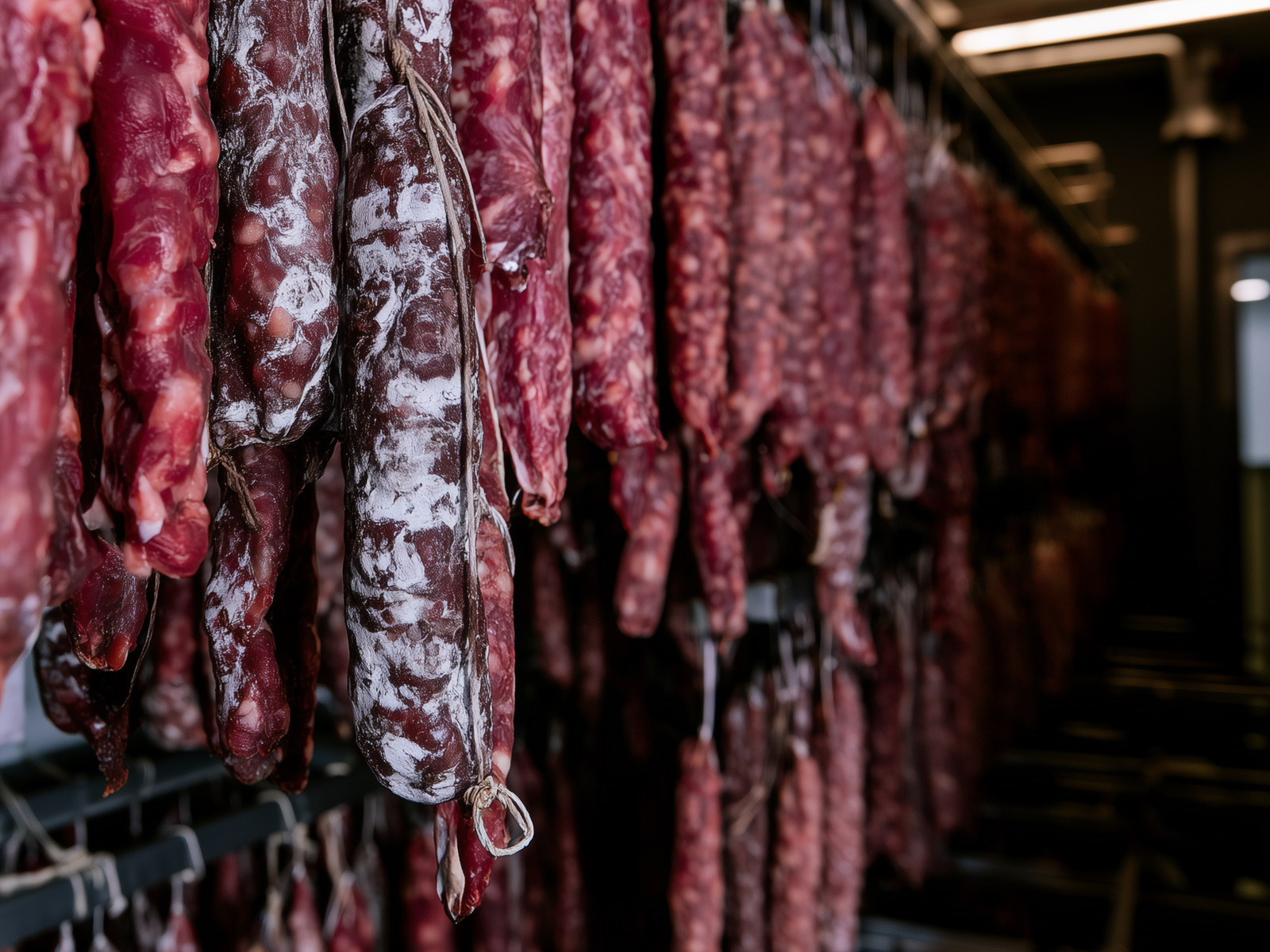
Dry curing doesn't happen in isolation. Humidity, temperature, airflow and seasonal changes all influence how a product dries and develops.
What worked on one day may need more attention on another. The job is to understand those changes and let the product develop at the pace it needs.
02 · Dry-Cured Salami
You can't rush fermentation.
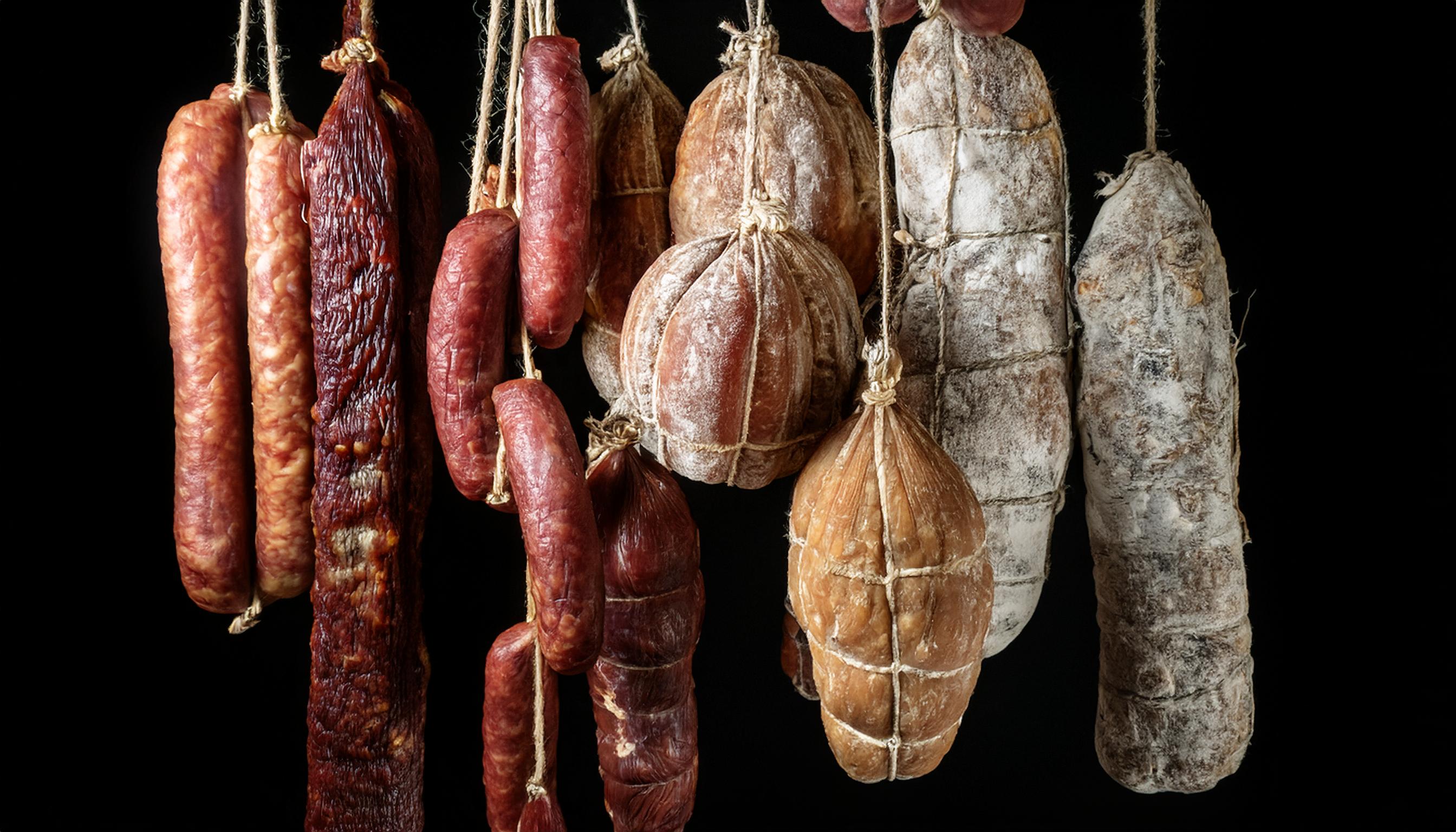
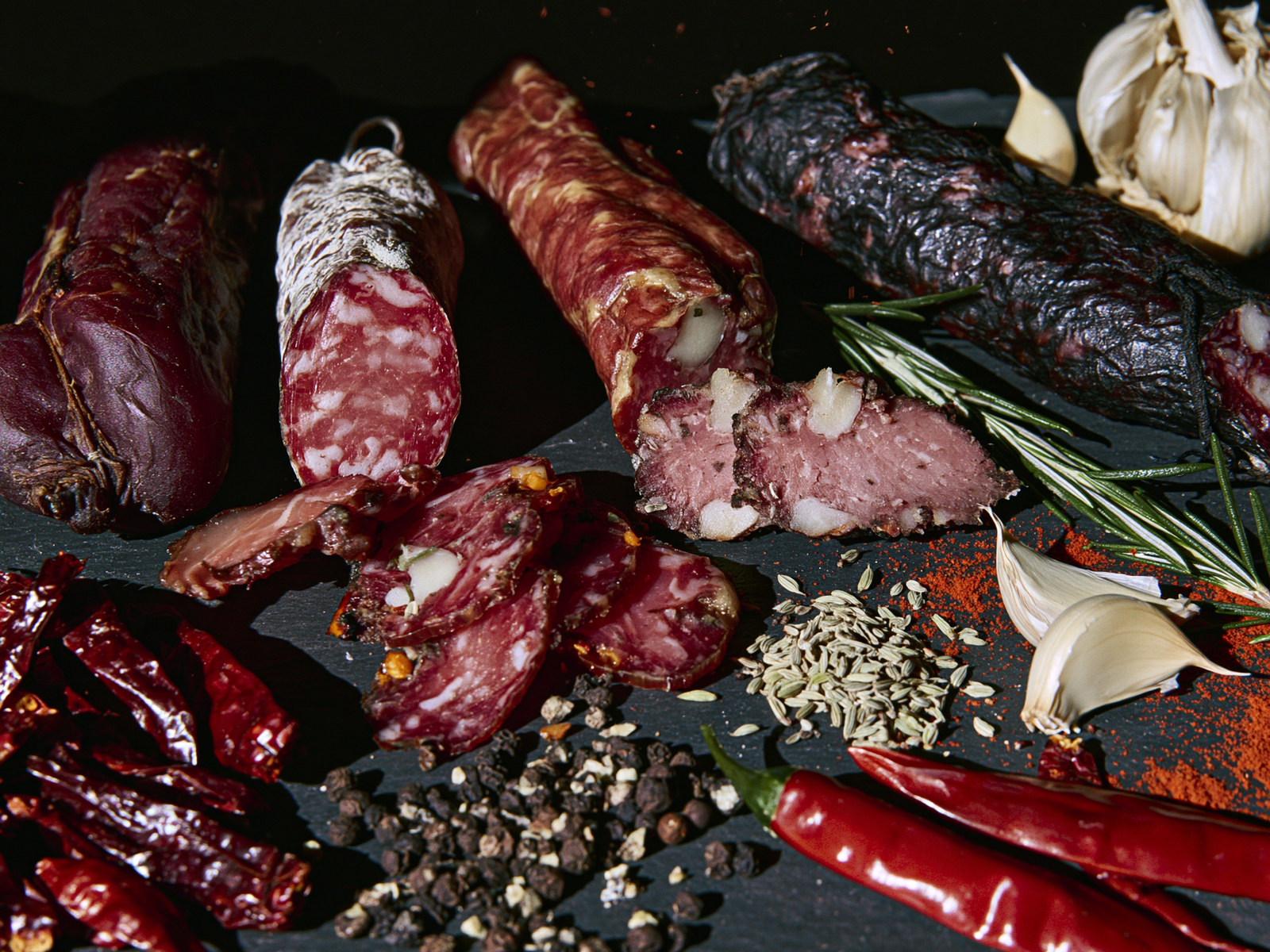
A fermented salami changes throughout the process. Acidity develops, moisture leaves the product, flavour changes and the casing and surface evolve with it.
Temperature, humidity and time all matter. The conditions are never completely identical from one batch to the next.
Making salami is partly about knowing the process and partly about knowing what to look for.
03 · Hands-on work
You still have to pay attention.
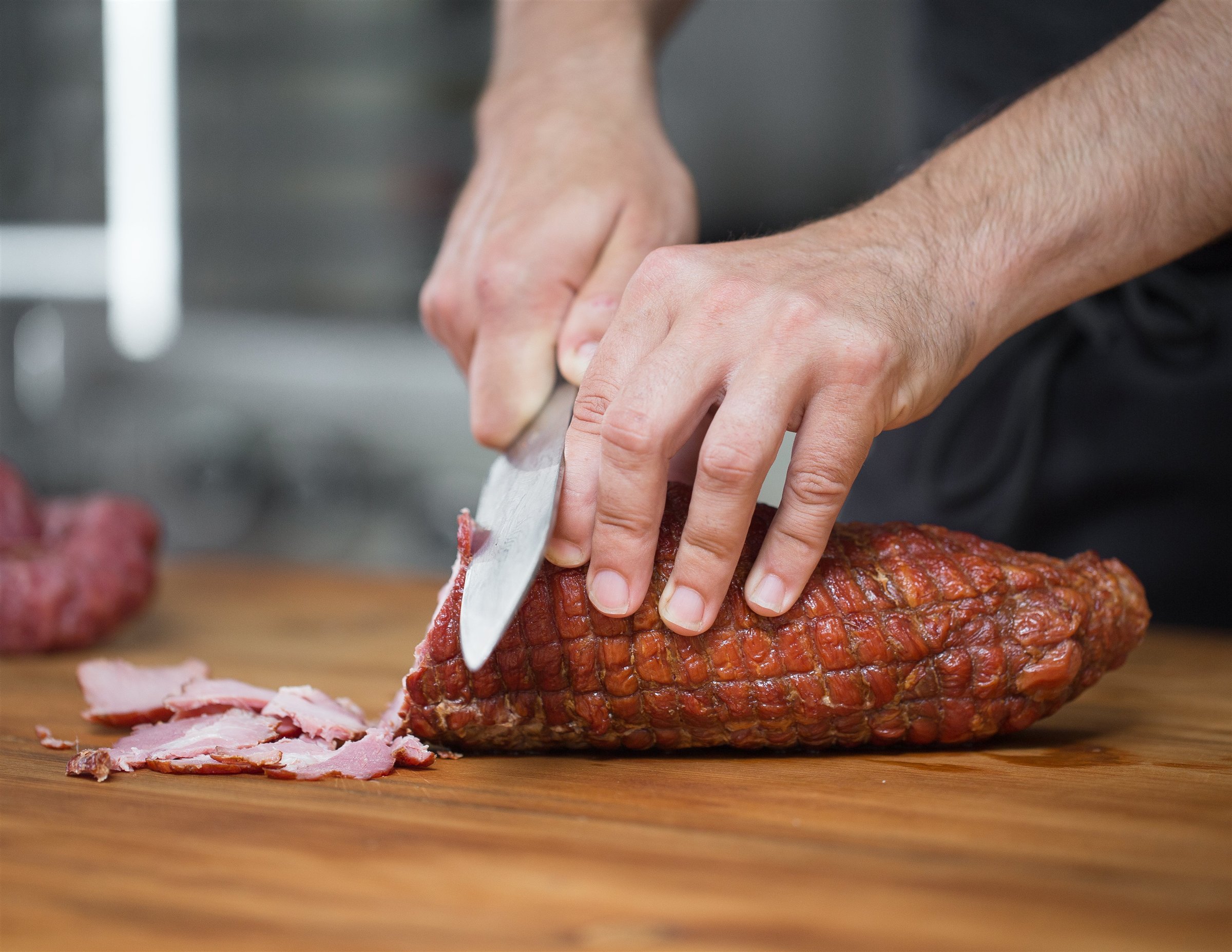
Machines can control conditions and equipment can make the work more consistent, but they can't replace looking, touching, smelling and tasting.
Food changes while you make it. Part of the job is noticing when it does.
04 · Smoked Products
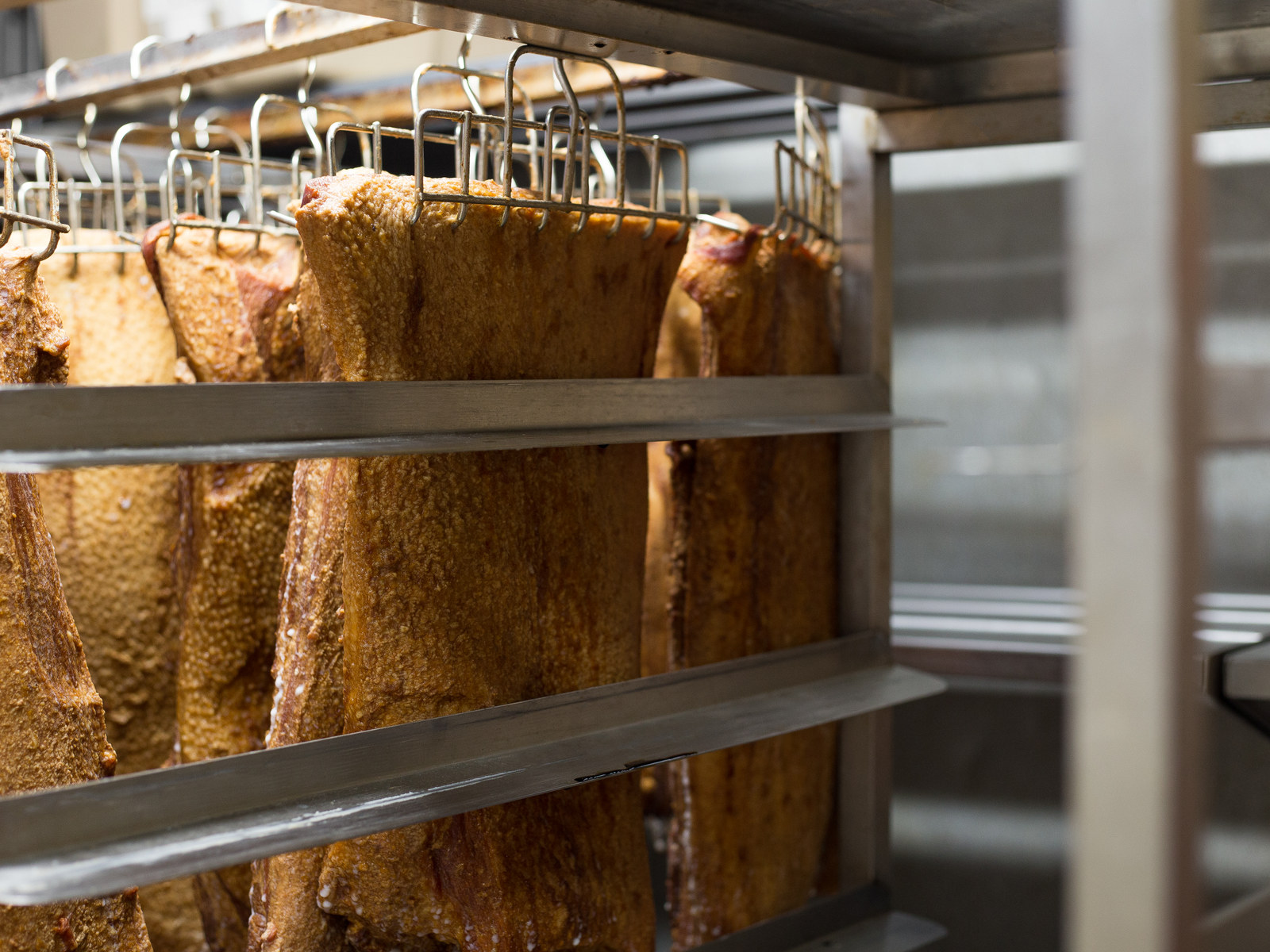
Smoke changes more than the colour.
Smoking adds flavour, aroma and character, but every product responds differently. Bacon, ham, sausages and fermented products each have their own relationship with heat and smoke.
The goal isn't simply to make something smoky. It's to know when enough is enough.
05 · Fresh Sausage
Fresh doesn't mean simple.
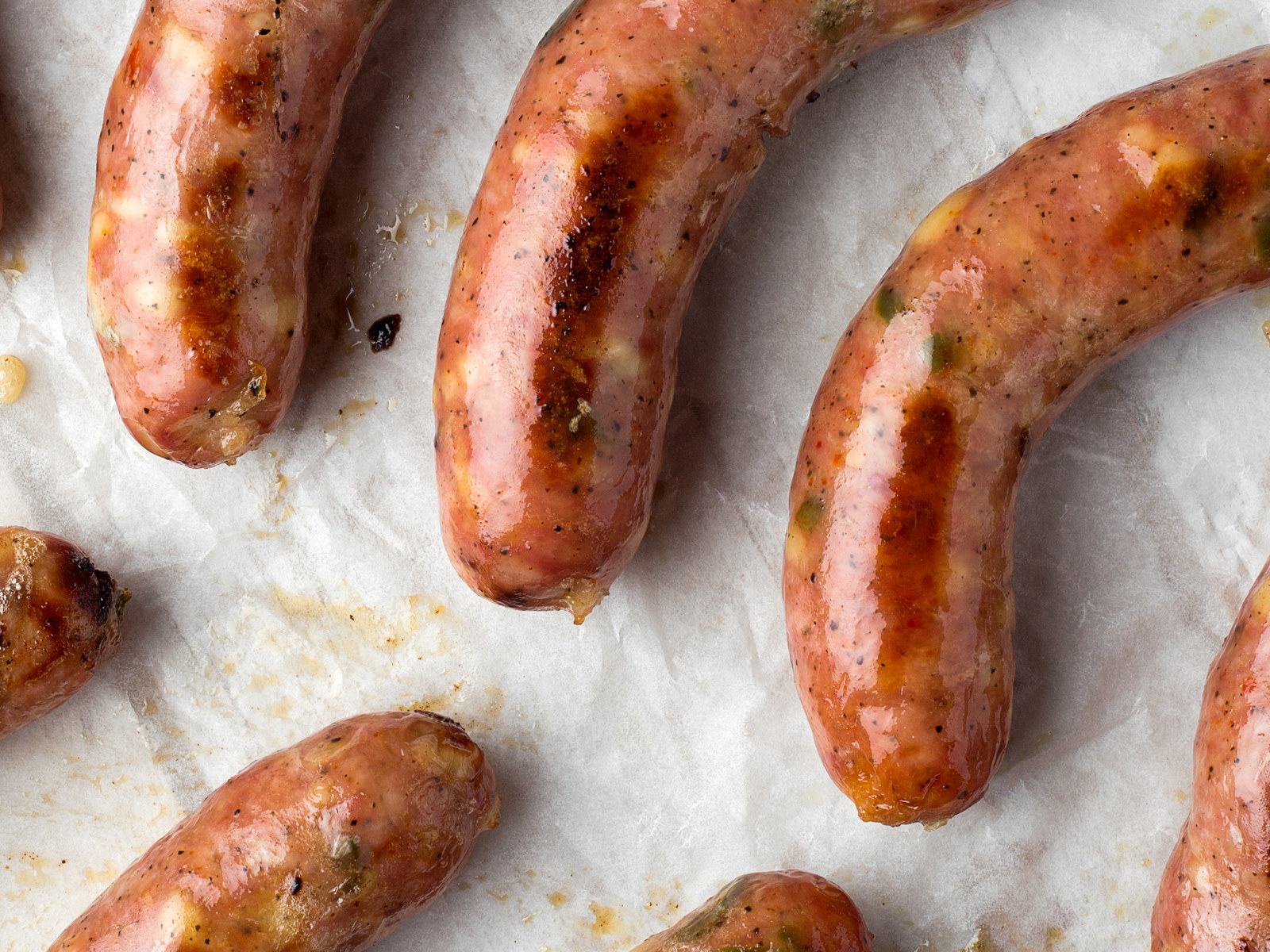
Fresh sausage has fewer places to hide. The grind, texture, seasoning, ingredients and balance all show up immediately when it hits the grill.
Whether it's apple and sage, red wine and garlic or caramelized onion and pepper, each recipe has to eat like the product it was meant to be.
06 · Small Batch / Limited Production
Some things only get made when there's room to make them properly.
Pancetta, guanciale, duck prosciutto, nduja and other small runs compete for the same time, space and attention as the rest of production.
We make them when the schedule allows rather than forcing them into continuous production.